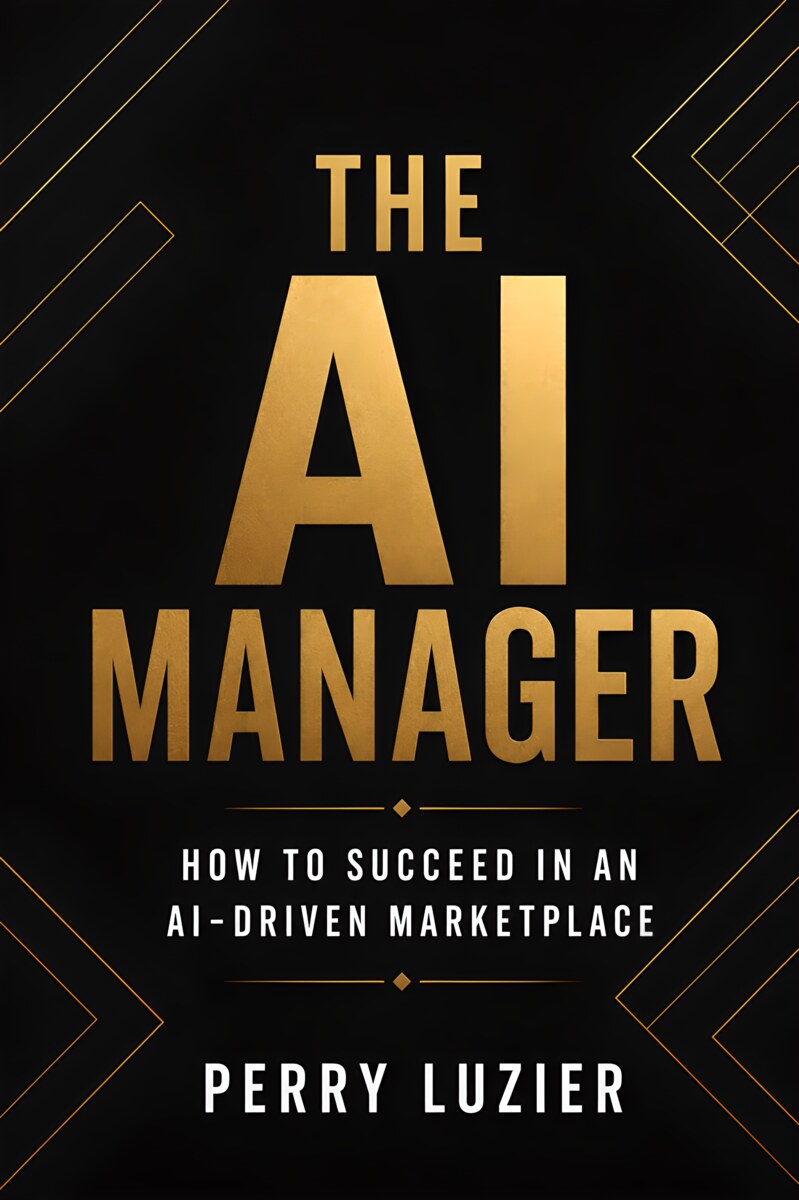
The AI Manager.
AI will not replace your team. It changes how you lead one.
Perry Luzier's nonfiction examination of how artificial intelligence is transforming entry-level work, and what it means for the managers, employees, and owners living through the shift. It is also the thinking that shaped how Luzran builds.
The real question is not whether AI arrives. It is how you manage it.
Most of the noise around AI is about replacement, which jobs disappear, how fast, and who is next. The AI Manager takes a different view. The tasks that vanish first are the repetitive, entry-level ones, and that quietly reshapes how a business hires, trains, delegates, and grows.
The book is a practical field guide for the people actually responsible for that transition: managers deciding what to automate, employees learning to work alongside these systems, and owners trying to build a company that runs without them in every decision.
Four ideas that carry through
Augment, not replace
AI is most valuable when it removes repetitive load from people, not when it removes the people. The goal is leverage, not headcount cuts.
The shift in entry-level work
The tasks that used to train junior employees are the first to be automated. That changes how managers hire, delegate, and grow a team.
A framework for owners
How to decide what to automate first, what to keep human, and how to lead a team through the change without losing trust.
The thinking behind the method
The book is the foundation for the Infrastructure Doctrine, the philosophy Luzran uses to remove the owner as the bottleneck.
The book is the theory. Luzran is the practice.
The AI Manager argues that AI works best when it takes work off people's plates. Luzran turns that argument into installed systems, the operational infrastructure that removes the owner as the bottleneck, so a business keeps generating revenue, serving clients, and making decisions without one person in every room. That philosophy has a name: the Infrastructure Doctrine.
Read The AI Manager.
Available now on Amazon. If it resonates, the next step is seeing where your own business is bottlenecked.